

Few places combine intense sun, dramatic temperature swings, and sudden hailstorms quite like Colorado Springs. A car parked outside here faces a different set of stresses than one in a milder, cloudier climate, and factory clear coat was never designed to handle all of it indefinitely. Knowing which specific local conditions do the most damage helps explain why so many owners here look into additional paint protection rather than relying on factory clear coat alone. None of these stresses show up overnight, which is exactly why so many owners are surprised at how much older their paint looks compared to a similar vehicle kept somewhere milder.
Why Is UV Exposure So Much Stronger at Altitude?
Higher elevation means less atmosphere between the sun and your car’s paint, which translates into meaningfully stronger UV exposure than the same sunny day would deliver at sea level. That extra UV accelerates the breakdown of the resins in factory clear coat, a process that shows up first as a loss of depth and gloss, then eventually as visible fading, especially on darker colors.
How Quickly Does This Actually Show Up on Paint?
Unprotected paint kept outside at altitude can start showing measurable dulling within just a few years, well ahead of what an owner in a lower elevation, cloudier climate might expect. Garaged vehicles fare much better, but daily drivers without covered parking are the ones who notice the difference first.
What Happens to Paint During Rapid Temperature Swings?
Colorado Springs can swing from a warm sunny afternoon to a hard freeze overnight within the same 24 hours, especially in shoulder seasons. That repeated expansion and contraction puts stress on clear coat over time, contributing to micro cracking that becomes more visible as a vehicle ages. It is a slower, less dramatic form of damage than a rock chip or hailstorm, but it adds up across years of daily exposure.
What Does Car Ceramic Coating Colorado Springs Owners Rely On Actually Do?
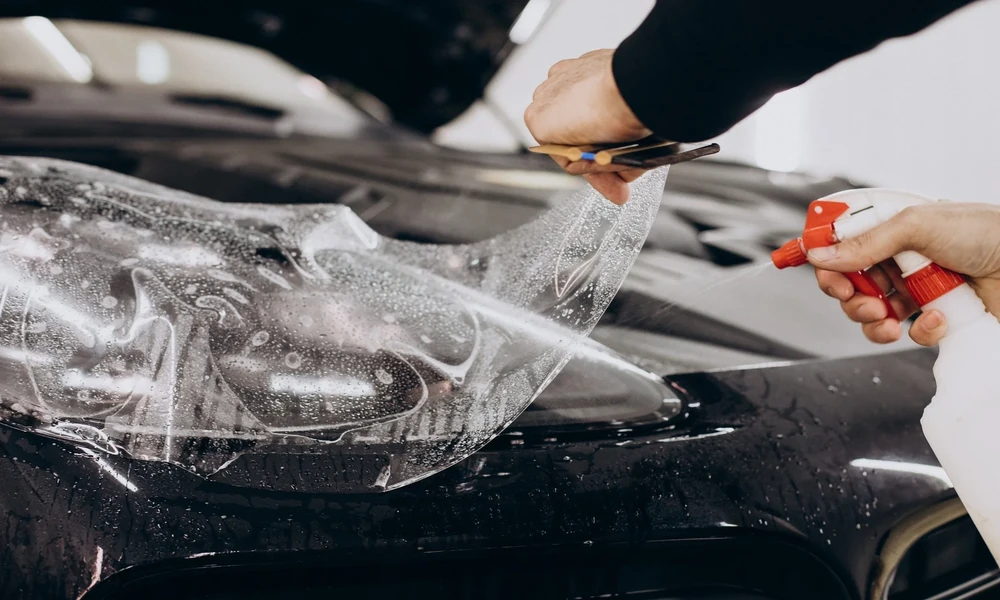
This is the gap most car ceramic coating colorado springs owners are trying to close. A quality coating chemically bonds to the clear coat, forming a hard, UV resistant layer that slows the oxidation process significantly compared to bare factory clear coat. Beyond UV resistance, the hydrophobic surface it creates also makes it easier to rinse off the road grime and mineral deposits that accumulate quickly here, especially after a storm.
Does Coating Prevent Fading Entirely?
Coating slows UV related fading substantially, but it does not make paint immune to it altogether, particularly for a vehicle that spends most of its life parked outside in direct sun. Garaging or shading the car when possible still meaningfully extends how long the paint holds its original depth and color, even on a coated vehicle.
How Does Hail Fit Into the Picture?
Coating does not prevent dents, since dents are a structural deformation of the metal panel underneath the paint, not a surface level issue. What it can help with is the surface scuffing and dulling that often develops on paint after hail grazes across it during a storm, along with making the grime and debris that follows a hailstorm easier to wash off cleanly.
Does Where You Park Change How Much Protection You Need?
A vehicle parked in a covered garage every night faces a very different exposure profile than one left in an open lot at work for eight hours a day, even if both belong to owners in the same neighborhood. Daily UV exposure and temperature swings accumulate specifically during the hours a car sits uncovered, so two otherwise identical vehicles can age very differently in Colorado Springs depending purely on parking habits.
Does a Coating Still Make Sense for a Garaged Car?
Even a car with covered parking at home usually spends meaningful time outside during a commute, errands, or a workday, so the cumulative exposure still adds up over a year. Coating remains worthwhile for garaged vehicles too, just with a longer runway before UV related fading becomes visible compared to a car left outside around the clock.
Colorado Springs asks a lot of a car’s paint between the elevation, the temperature swings, and the occasional hailstorm. Ceramic coating will not solve every one of those challenges on its own, but it meaningfully slows the UV related damage that does the most cumulative harm over the years a car spends parked outside here. Pairing it with smart parking habits during the harshest weeks of summer sun and winter freeze closes most of the remaining gap.