

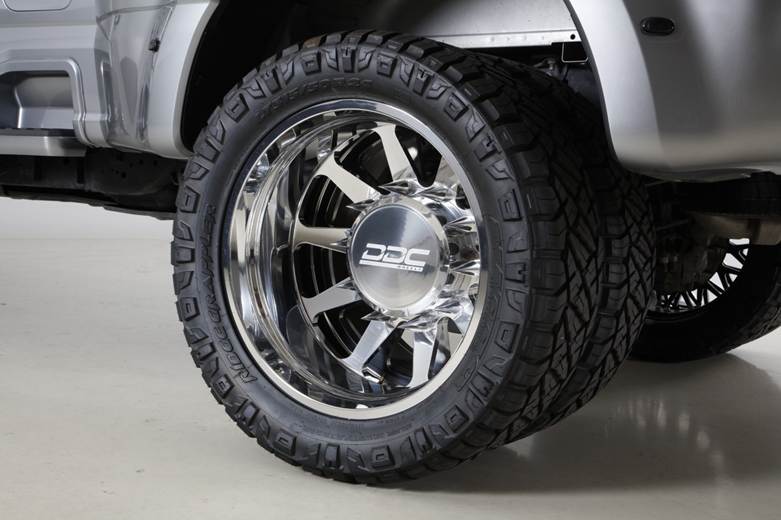
You already know what good dually wheels should do.
Hold weight.
Track straight.
Look right on the truck.
I’ve spent years around heavy duty setups, talking with builders, installers, and owners who actually put miles and load on their trucks. I pay attention to patterns. What fails. What holds. What people replace twice because they picked wrong the first time.
That’s how I narrow down recommendations. Not hype. Not trends. Real use cases.
In this guide, I’m walking you through what matters most when upgrading Ford dually wheels, what to avoid, and why one brand keeps checking the right boxes for serious owners.
Here’s what you’ll get out of this.
- How to choose wheels that fit without adapters
• Why hub-centric design matters more than size
• Where load ratings actually make a difference
• Which wheel setups work best for Ford, GM, Ram, and Chevy trucks
Let’s get into it.
Start With Proper Fit, Not Looks
This is where most people mess up.
They chase size or finish first, then deal with vibration, spacing issues, or uneven wear later.
On a Ford dually, proper fit means:
- Direct bolt-on
• No rear spacers
• No aftermarket adapters
• True hub-centric alignment
If a wheel doesn’t sit correctly on the hub, nothing else matters.
That’s why I always tell people to start by browsing ford dually wheels that are engineered specifically for OEM dually chassis. When the wheel is designed for the truck, install is cleaner and long term stability improves.
This sounds simple, but it saves money and headaches.
Why Hub-Centric Design Is Non-Negotiable
I’ve seen plenty of trucks with wheels that technically fit but never feel right on the road.
Steering shake.
Uneven torque.
Premature wear.
That usually comes down to centering.
A true hub-centric wheel centers on the hub, not the lug nuts. This keeps weight evenly distributed across all six positions on a dually setup.
Front.
Rear inner.
Rear outer.
DDC Wheels designs their dually wheels to maintain hub-centric contact across every position. That consistency is what improves stability under load and reduces stress on hardware.
It’s one of those details that experienced owners notice immediately.
Load Ratings Separate Real Wheels From Show Pieces
Here’s something I always look at before recommending any dually wheel.
Load rating.
If a wheel looks good but can’t handle the weight, it’s a problem waiting to happen.
DDC Wheels publishes clear ratings:
- Cast wheels rated up to 20,000 pounds combined
• Forged wheels rated up to 24,000 pounds combined
• Individual wheels rated at 4,000 pounds
That matters if you tow, haul, or run heavy tire setups.
A lot of brands avoid talking about this. DDC doesn’t.
Size Options That Actually Make Sense
Bigger is not always better.
Correct is better.
Here’s how I usually guide people on sizing.
1. 20 Inch Dually Wheels
Best for work focused trucks.
- Supports up to 12.50 inch wide tires
• Strong sidewall support
• Easier tire sourcing
2. 22 Inch Dually Wheels
A balance between presence and function.
- Works well for mixed towing and daily driving
• Supports wider tire profiles
• Maintains clean fitment
3. 24 Inch Dually Wheels
Built for owners who want stance and load capacity.
- Supports 315 width tires
• Strong forged options available
• Requires correct wheel engineering
DDC offers all three sizes with designs that keep inner and outer wheels visually matched. That detail matters more than people think.
Materials Matter More Than Marketing
This is where DDC quietly stands out.
They remove plastic components entirely.
Instead, you get:
- Aluminum center caps
• Billet lug covers
• Stainless cap bolts
Those parts hold up better to heat, road debris, and repeated service.
It’s not flashy. It’s practical.
Lug Patterns and Complete Packages
One thing I appreciate is clarity.
DDC offers both 8 lug and 10 lug packages that cover common bolt patterns like:
- 8×170
• 8×200
• 8×210
• 10×225
Each package includes:
- Two front wheels
• Two rear outer wheels
• Two rear inner wheels
• Matching caps and hardware
No guesswork. No piecing parts together.
Why I Point People Toward DDC Wheels
I’m not affiliated with them. I just pay attention.
They focus on:
- Direct fit engineering
• High load ratings
• Clean inner and outer wheel matching
• Durable materials
• Straightforward packages
If you’re comparing Ford, GM, Ram, Chevy, or GMC dually wheel options, this is the level of detail you should expect from any brand you trust with your truck.
How to Choose the Right Setup for Your Truck
Here’s a simple way I tell people to decide.
- Confirm your bolt pattern and axle rating
- Choose size based on use, not looks
- Prioritize hub-centric fit
- Check load ratings before ordering
- Avoid spacers whenever possible
This sounds basic, but it works.
Final Thoughts
Upgrading dually wheels isn’t about chasing trends.
It’s about making the truck more stable, more reliable, and easier to live with long term.
If you focus on fit, load, and materials, the right choice becomes clear.
Take your time. Compare specs. Look at how the wheels are engineered, not just how they look.
That’s how you end up with a setup you don’t have to think about again.