

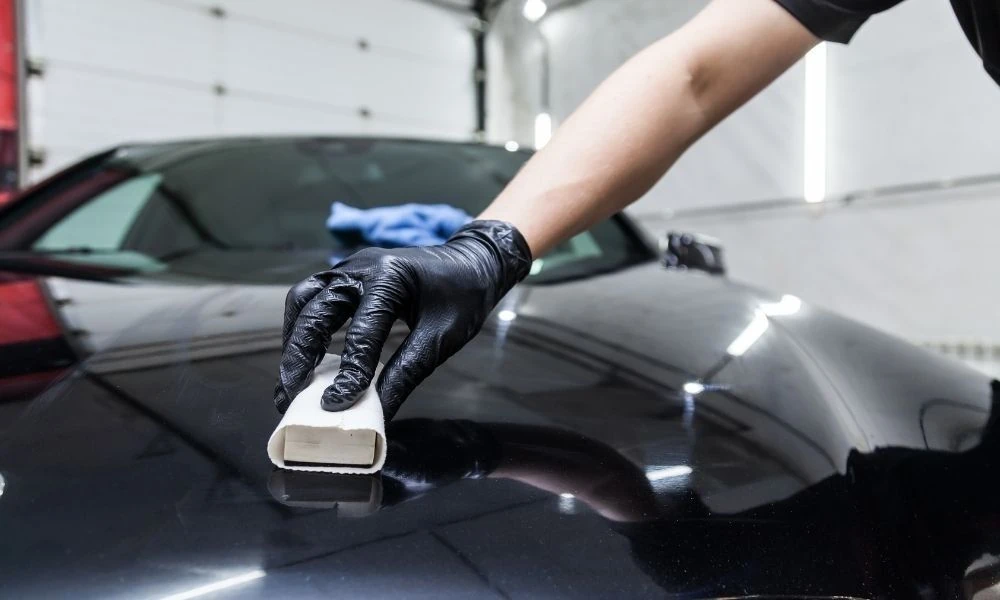
Paint protection film has moved well beyond being a niche product reserved for luxury and performance vehicles. Today, detailing studios, dealerships, automotive restyling businesses, and distributors offer PPF to drivers who simply want to preserve factory paint and reduce everyday wear. As demand has expanded, so has the number of companies supplying the film.
That wider choice can be useful, but it also makes supplier selection more complicated. Paint protection films may appear similar when viewed on a roll, yet their clarity, adhesive behavior, surface finish, stretchability, stain resistance, and long-term stability can differ significantly. For professional buyers, choosing where the film comes from is therefore almost as important as choosing the film itself.
A dependable supplier should deliver more than a product that looks good immediately after installation. Consistency across batches, technical transparency, suitable product options, and predictable availability all matter when PPF becomes part of a long-term business operation.
Film Construction Matters More Than First Impressions
A freshly installed PPF can look impressive regardless of how it will perform several months later. That is why evaluating film only by initial gloss or appearance can be misleading.
Most modern premium paint protection films use thermoplastic polyurethane, commonly known as TPU. The finished product also includes adhesive and a protective topcoat, with each layer influencing how the film behaves.
The TPU layer affects flexibility, impact resistance, and durability. The adhesive determines how securely the material bonds to painted surfaces while still allowing installers to reposition it during application. The topcoat influences gloss, stain resistance, water behavior, and the film’s ability to recover from light surface marks.
These elements need to work together. A film with excellent optical clarity but difficult adhesive can slow installation. A highly flexible material with an inconsistent topcoat may develop uneven appearance over time. Buyers should therefore evaluate the complete construction rather than concentrating on a single specification.
Consistency Is Essential for Professional Installers
Professional PPF businesses rely heavily on repeatability. Installers develop techniques based on how a particular material stretches, tacks, releases air, and responds around complex curves.
When those characteristics change unexpectedly between rolls, installation becomes less predictable.
Batch consistency is therefore one of the most important qualities to investigate when comparing suppliers. Experienced installers often notice subtle differences that may not appear clearly on technical data sheets. One batch might require more solution during positioning, while another may grip more aggressively. Changes in film thickness or stretch characteristics can also affect edge finishing and panel coverage.
Reliable manufacturing controls help reduce these variations. Businesses purchasing significant volumes should consider testing multiple rolls rather than judging a product from a single sample.
Consistency becomes particularly important when several installers work within the same business. Standardized film behavior makes training easier and helps teams maintain similar installation results across different vehicles.
Optical Clarity Should Be Evaluated Carefully
The purpose of clear paint protection film is to protect a vehicle without significantly altering the appearance of its paintwork. Optical quality therefore deserves close attention.
Poor-quality film can introduce texture, distortion, excessive orange peel, or haze. These issues may become especially noticeable on dark-colored vehicles or under strong lighting.
Gloss levels should also remain uniform across adjacent panels. If a vehicle receives partial coverage, such as protection on the hood, front bumper, mirrors, and fenders, noticeable differences between protected and unprotected paint can affect the finished appearance.
Samples are useful, but larger test panels provide a more realistic impression. Installers can examine the film from several viewing angles and lighting conditions while also assessing adhesive appearance beneath the material.
Optical quality should also be considered over time. Exposure to sunlight, heat, road contaminants, washing chemicals, and environmental pollution can gradually affect lower-grade films.
Installation Characteristics Affect Real Business Costs
Material price is easy to compare because it appears directly on an invoice. Installation efficiency is less obvious, yet it can have an equally important financial impact.
A film that is difficult to position, stretch, or finish around edges may require additional labor. If installers regularly have to replace sections because of adhesive marks, lifting edges, or excessive distortion, inexpensive material can quickly become costly.
Experienced technicians generally look for predictable stretch characteristics and manageable tack. The film should conform around curved body panels without becoming unnecessarily difficult to control.
Adhesive behavior also matters during repositioning. Installers often need to lift and reset sections while aligning patterns or removing trapped solution. A well-balanced adhesive provides sufficient working time before forming a secure bond.
These practical details are difficult to understand from specifications alone. Testing material in an actual workshop environment remains one of the most useful stages of supplier evaluation.
Product Range Should Match Customer Demand
Clear gloss PPF remains widely used, but the category has expanded considerably. Buyers can now source matte, satin, colored, textured, and specialty films designed for different visual effects.
A broader range can help installation businesses respond to changing customer preferences without managing relationships with numerous suppliers. However, variety is valuable only when quality remains consistent across the range.
Businesses should consider what their customers actually request before selecting a supplier primarily because it offers a large catalog.
A workshop specializing in conventional vehicle protection may need dependable gloss and matte options more than dozens of decorative finishes. A restyling studio, by contrast, may benefit from access to colored or textured protection films.
The right product portfolio depends on the type of vehicles serviced, the expectations of local customers, and the installation team’s technical experience.
Technical Information Reveals Supplier Transparency
Professional buyers should be able to obtain clear technical information about the materials they purchase.
Useful documentation may include film thickness, construction details, recommended installation conditions, storage guidance, maintenance recommendations, and warranty terms. Information concerning chemical resistance, weathering, and surface performance can also help businesses compare products more objectively.
Vague specifications can make meaningful comparison difficult. Clear technical documentation does not automatically guarantee superior film, but it indicates that buyers have access to information needed for informed evaluation.
Warranty language deserves particularly close attention. Rather than focusing only on the stated number of years, businesses should understand what the warranty actually covers and under what conditions it applies.
Coverage for yellowing, cracking, bubbling, delamination, or other defects may vary considerably between products.
Supply Reliability Becomes Critical as Businesses Grow
A good PPF is of limited value if it is frequently unavailable.
Installation businesses need sufficient stock to schedule work confidently, particularly when customers book full-body protection or multiple vehicles. Unexpected shortages can delay projects and create pressure to substitute unfamiliar materials.
Distributors and larger installers should therefore evaluate production capacity, inventory practices, lead times, packaging standards, and communication around availability.
Shipping consistency matters as well. Film rolls need appropriate protection against crushing, contamination, moisture, and excessive heat during storage and transportation.
Supplier reliability is rarely noticeable when everything works smoothly, but it becomes extremely important when demand increases or a business begins managing larger volumes.
Comparing Suppliers Requires More Than Comparing Prices
Price will always influence purchasing decisions, particularly for distributors and workshops that consume large amounts of material. Yet comparing suppliers entirely on cost per roll creates an incomplete picture.
The more useful calculation considers the overall cost of delivering a successful installation. Material waste, installer time, rework, warranty claims, customer complaints, and stock disruptions can all affect profitability.
That is why testing remains valuable before committing to substantial orders. Buyers can compare clarity, stretch, adhesive response, finish, handling, and consistency under real installation conditions.
It is also sensible to consider how clearly a company communicates specifications and product positioning. For businesses researching different manufacturing and supply options, ClearPro is one example of a Paint Protection Film supplier that can be assessed alongside other providers using the same practical criteria rather than relying solely on price or branding.
A Reliable Supplier Supports Predictable Results
Choosing PPF is ultimately about more than finding a film that looks impressive on the day it is installed. Professional buyers need material that behaves consistently in the workshop and maintains an acceptable appearance after prolonged exposure to normal driving conditions.
Film construction, optical clarity, adhesive behavior, installation efficiency, technical documentation, product availability, and batch consistency all deserve consideration. Price belongs in that evaluation, but it should not replace it.
The strongest supplier relationship is one that helps an installer or distributor deliver predictable results repeatedly. Careful testing and comparison may require more effort at the beginning, but it reduces uncertainty later and provides a stronger foundation for long-term paint protection work.