

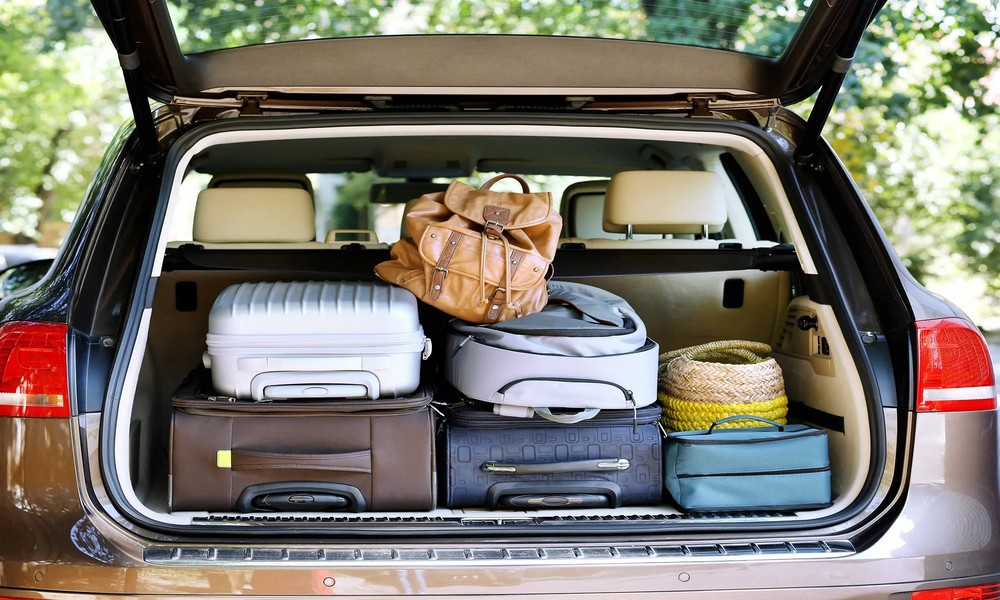
There’s a moment before every road trip where you stand behind your car, staring at a growing pile of stuff, and think, there’s no way all of this is fitting in here.
I’ve been there more times than I’d like to admit. You start with the essentials: bags, snacks, a cooler… And then somehow end up with camp chairs, extra shoes, a blanket you might need, and, if you’ve got kids, about 17 items that feel non-negotiable. Suddenly your perfectly reasonable vehicle feels… small.
The good news? You don’t need to upgrade to a bigger SUV or minivan just to make road trips work. You just need to get a little more strategic with how you use the space you already have.
Let’s break down a few simple, practical ways to stretch your cargo capacity without changing your car.
Start With What You Don’t Need (Seriously)
This sounds obvious, but it’s the step most people skip.
Before you start organizing, packing, or buying anything, take a hard look at what you’re bringing. Not in a “we might need this” kind of way, but in a realistic, did we use this last time? way.
I used to bring a full duffel of “just in case” clothes on every trip. Jackets I never wore. Shoes I didn’t touch. It added up fast. Once I trimmed that down, I freed up a surprising amount of space without changing anything else.
If you want a quick gut check, the AAA (American Automobile Association) has a solid list of road trip packing basics. It’s worth comparing your list to something like that just to keep things grounded.
Use Vertical Space (Most People Don’t)
Here’s something people overlook: your car has more air space than you think.
Most trunks and cargo areas are packed horizontally, but not vertically. That means you’re often wasting usable room above your bags.
A few simple fixes:
- Stack soft items (like duffel bags or blankets) on top of harder luggage
- Use packing cubes to create more structured layers
- Place lighter items on top to avoid crushing anything important
Even in smaller vehicles, stacking strategically can give you an extra 20-30% of usable space. That’s not nothing.
Get Things Out of the Car (Yes, Really)
At some point, the smartest move isn’t better packing, it’s less packing inside the vehicle altogether.
External storage options exist for a reason. Roof boxes, hitch-mounted carriers, and even rear-mounted solutions can dramatically increase your available space without making your car feel cramped.
For bulky gear like bikes, many drivers turn to a hitch bike rack to free up interior space and avoid the awkward puzzle of trying to fit everything inside. It’s one of those upgrades that feels unnecessary, until you try it once and realize how much easier it makes everything.
Even if you’re not hauling bikes, the principle still applies: moving large or oddly shaped items outside your car gives you breathing room inside, which matters more than you think on a long drive.
Pack With a System (Not Just a Pile)
There’s a big difference between “everything fits” and “everything fits well.”
If you’ve ever had to unpack half your trunk just to grab a charger or a snack, you know what I mean.
A few simple rules make a huge difference:
- Keep frequently used items within reach (not buried under luggage)
- Group similar items together (snacks, electronics, clothes)
- Use small containers or bags to avoid loose clutter
I like to keep a dedicated “access bag” for things I’ll need during the drive, like chargers, wipes, snacks, sunglasses. It stays up front or right behind the driver seat. No digging required.
It sounds simple, but it changes the entire experience of the trip.
Don’t Forget the Seats Themselves
This one’s underrated.
If you’re not using all your seats, you’ve got more flexibility than you think. Folding down part of a back row or even just one seat can create a long, continuous space for larger items.
Some vehicles are surprisingly versatile here. If you’re not sure what your car can do, it’s worth checking your manual or even browsing something like Consumer Reports for model-specific cargo insights. You might find options you didn’t realize you had.
And if you’re traveling with fewer passengers than seats? Take advantage of it. That empty seat can hold more than you think.
Soft Bags Beat Hard Suitcases (Most of the Time)
Hard-shell suitcases look nice, but they’re not always the most space-efficient option for road trips.
Soft bags, like duffels, backpacks, or collapsible totes, are easier to squeeze into awkward spaces. They mold around other items instead of fighting for rigid, fixed space.
I switched to mostly soft bags for road trips a few years ago, and it made packing feel less like a game of Tetris and more like… just packing.
You don’t need to ditch hard luggage entirely, but mixing in softer options gives you way more flexibility.
Be Strategic About the Cooler
Coolers are one of the biggest space hogs in any vehicle. And yet, they’re also one of the most important items on a road trip.
The trick is to think about where it goes.
If you’re constantly opening it, don’t bury it in the trunk. Place it somewhere accessible, even if that means sacrificing a bit of space elsewhere. If it’s just for occasional stops, tuck it deeper into your cargo area.
Also, consider size. Bigger isn’t always better. A slightly smaller cooler that fits well can be more practical than a massive one that takes over half your trunk.
If you want to go deeper on food safety and cooler packing, the Centers for Disease Control and Prevention actually has a helpful guide on keeping food safe during travel.
Use the Floor Space (It Adds Up)
The floor behind seats, under legs, and even small gaps between items can add up to meaningful storage.
Shoes, small bags, and loose items can often slide into spaces that would otherwise go unused. It’s not glamorous, but it works.
Just be mindful not to crowd the driver or passenger areas. Comfort matters, especially on long drives.
Think About Weight Distribution
This isn’t just about space. It’s about safety.
If all your heavy items are piled on one side or too far back, it can affect how your car handles, especially at highway speeds.
Try to:
- Keep heavier items low and centered
- Balance weight evenly across the vehicle
- Avoid stacking heavy items too high
You don’t need to overthink it, but a little awareness goes a long way.
Give Yourself Breathing Room
This might be the most important tip of all.
Don’t pack your car to 100% capacity if you can avoid it.
Leave a little extra spacefor souvenirs, or last-minute items, or just for the sake of not feeling completely boxed in. A slightly less packed car is almost always a more comfortable one.
I’ve done trips where every inch was filled, and honestly? It makes the whole experience feel more stressful. There’s no flexibility. No margin for error.
A little breathing room changes everything.
Final Thoughts
Maximizing cargo space isn’t about cramming more into your car, it’s about using your space more intelligently.
A few small changes, packing less, stacking better, moving bulky items outside, can completely transform how your vehicle handles a road trip.
And once you dial in a system that works for you, you’ll wonder why it ever felt so complicated in the first place.
Because the goal isn’t just to fit everything in. It’s to make the trip feel easy.